

A Farmer in Western Kenya Exemplifies Multiple Income Streams Through Information and Innovation

In Butsotso South, Kakamega County, one farmer’s journey stands as living proof that access to the right information can transform livelihoods. Violet Kageha, a small-scale farmer with an insatiable appetite for learning, has turned her homestead into a thriving hub of innovation, productivity, and income, thanks largely to knowledge shared through The Organic Farmer Magazine.
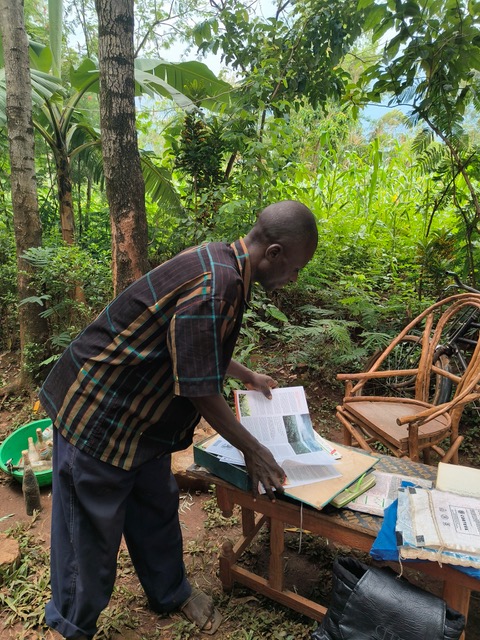
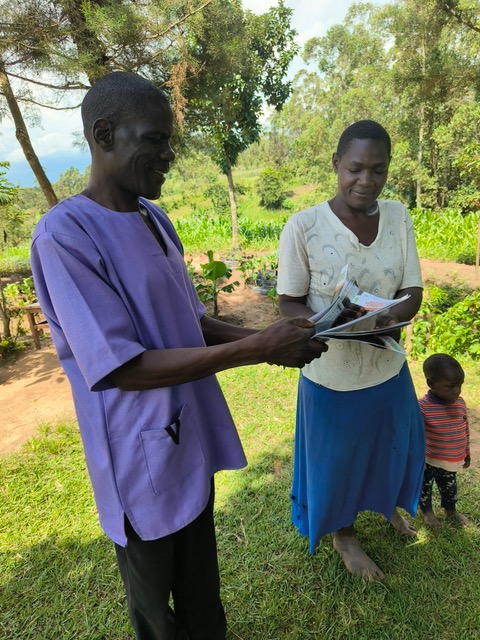
Violet’s transformation began when she sought guidance from Biovision Africa Trust’s extension officer for Kakamega County. She was introduced to The Organic Farmer (TOF) Magazine, a resource that opened her eyes to agroecology and the many opportunities it offers smallholder farmers. What followed was a journey of experimentation, learning, and impressive success.
A Farm That Teaches by Example
A walk through Violet’s farm feels more like an educational tour than a routine visit. Beautifully laid-out mandala and cone gardens dominate the landscape, brimming with layers of leafy green vegetables. Carefully planted trees stabilize the sloping terrain, while heaps of well-prepared compost manure nourish crops throughout the year.
“I was trained on how to make compost properly,” Violet explains. Using dry plant matter, green leaves, especially phosphorus-rich tithonia, cow dung, and ash layered carefully, she produces highly nutritious compost. The results are visible in the vibrant, healthy crops growing in her diversified kitchen garden.
From her cereals and vegetables, Violet practices seed banking, carefully storing indigenous seeds in airtight glass bottles. She sells some to local farmers while keeping the rest for her own use, ensuring food security and an additional income stream.

Profits from Fish Farming
Further down the farm lies a large fish pond capable of holding 1,600 fish. From this enterprise alone, Violet earns an average of Ksh 60,000 per harvesting season, selling fish at two to three months old. Each kilogram goes for Ksh 300, and demand is never a problem.
“Whenever I announce that I’m harvesting fish, my neighbors flock to buy. I never remain with any,” she says, noting that few farmers in the region practice fish farming.
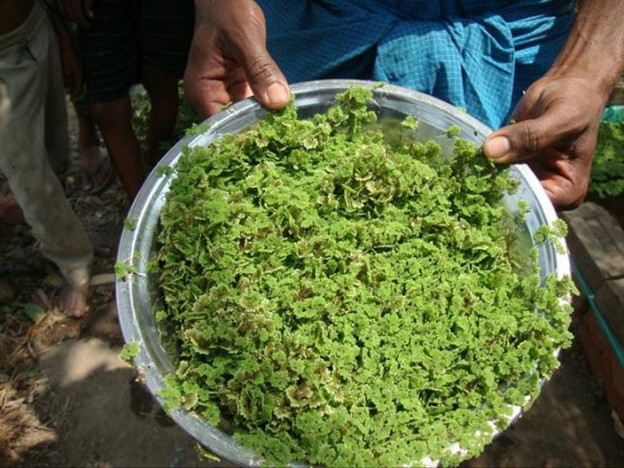
To manage costs, mainly fish feed and fingerlings, Violet supplements commercial pellets with edible weeds grown beside the pond. She is also cultivating azolla, a protein-rich plant she learned about from TOF Magazine, which she expects will significantly reduce feeding expenses.
Integrated Poultry and Livestock Innovations
Knowledge from TOF Magazine continues to shape Violet’s decisions. Behind her homestead, she keeps poultry and rears vermi worms as an alternative source of chicken feed. From the worms, she harvests vermi juice, which she uses as a foliar fertilizer to keep her vegetables healthy and productive.
“I’ve discovered that poultry feed can easily be made at home,” she says. “I feed my chickens with vermi worms and azolla.” She is also in the process of installing a black soldier fly unit to further diversify poultry feed sources.
Her farm is also home to three dairy cows. Inspired by TOF Magazine, Violet planted Super Napier grass to feed them and now multiplies planting material for neighboring farmers, a venture that has steadily boosted her income. Cow dung feeds into a biodigester that produces biogas for household energy and biofertilizer for crops.
Adding Value for Better Returns
Understanding the importance of value addition, Violet invested in a solar dryer. She dries vegetables and sweet potatoes, extending shelf life and preserving nutrients. From dried sweet potatoes, she makes flour, which she blends with wheat flour to bake pastries such as mandazi.
“The mandazi made from sweet potato flour have a distinct savory taste and no added sugar,” she explains. “That makes them very popular with health-conscious consumers.” Some of the flour is sold, adding yet another income stream.
Dried vegetables are also gaining popularity, especially in towns. During times of scarcity, families rely on them because they last longer without losing nutritional value. “Once soaked in cold water, they return to their original state. You can’t even tell they were dried,” Violet says.
Knowledge as a Pathway to Prosperity
Violet Kageha’s story is a powerful reminder that information can be as valuable as land or capital. Through continuous learning and a willingness to try new ideas, she has built a resilient farming system that generates income while cutting production costs.
“I am constantly training interested farmers on how to innovatively use what they already have to make money,” she says with pride.
Through continuous quest for learning, Violet has proven that small-scale agriculture is a world of endless possibilities.
Total comments (--)
Let others know what you think

The Same Author
Chilli Farmers in Bomet County of Kenya Turn a Challenge into a Lucrative Opportunity


3KM Members Demonstrate Strength in Numbers Through Aggregation and Value Addition



Lorem ipsum dolor sit amet, consectetur adipiscing elit. Suspendisse varius enim in eros elementum tristique. Duis cursus, mi quis viverra ornare, eros dolor interdum nulla, ut commodo diam libero vitae erat. Aenean faucibus nibh et justo cursus id rutrum lorem imperdiet. Nunc ut sem vitae risus tristique posuere.