

Chilli Farmers in Bomet County of Kenya Turn a Challenge into a Lucrative Opportunity
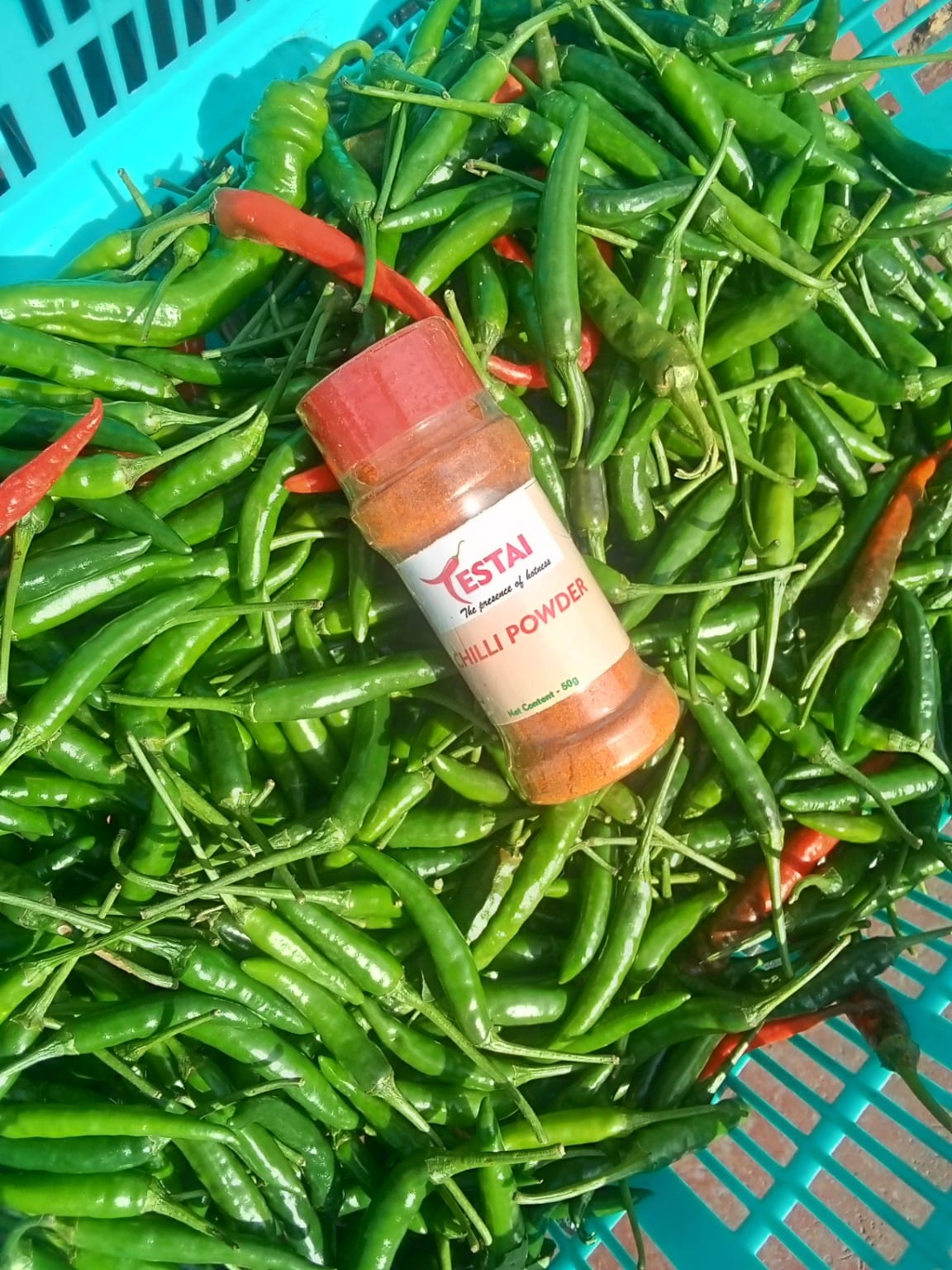
Richard Lang’at has always believed that farming is about more than producing food. It is about learning how to get the greatest possible value from what the farm produces. That belief was put to the test when his farmer group, Testai Farmers Group embraced avocado production and learned to intercrop avocado with chilli. The combination promised good returns. But as the chilli harvests grew, the members were faced with a common challenge; where would they sell it?
Fresh chilli is highly perishable, and without a reliable market, much of the harvest went to waste. The losses discouraged farmers. Gradually, members began abandoning chilli production, and a group that had once had about 350 farmers producing chilli was left with only a fraction.
Richard, however, saw an opportunity in the problem. “If we could find a way of preserving the chilli and adding value to it, farmers would not have to depend on selling it fresh,” he thought.
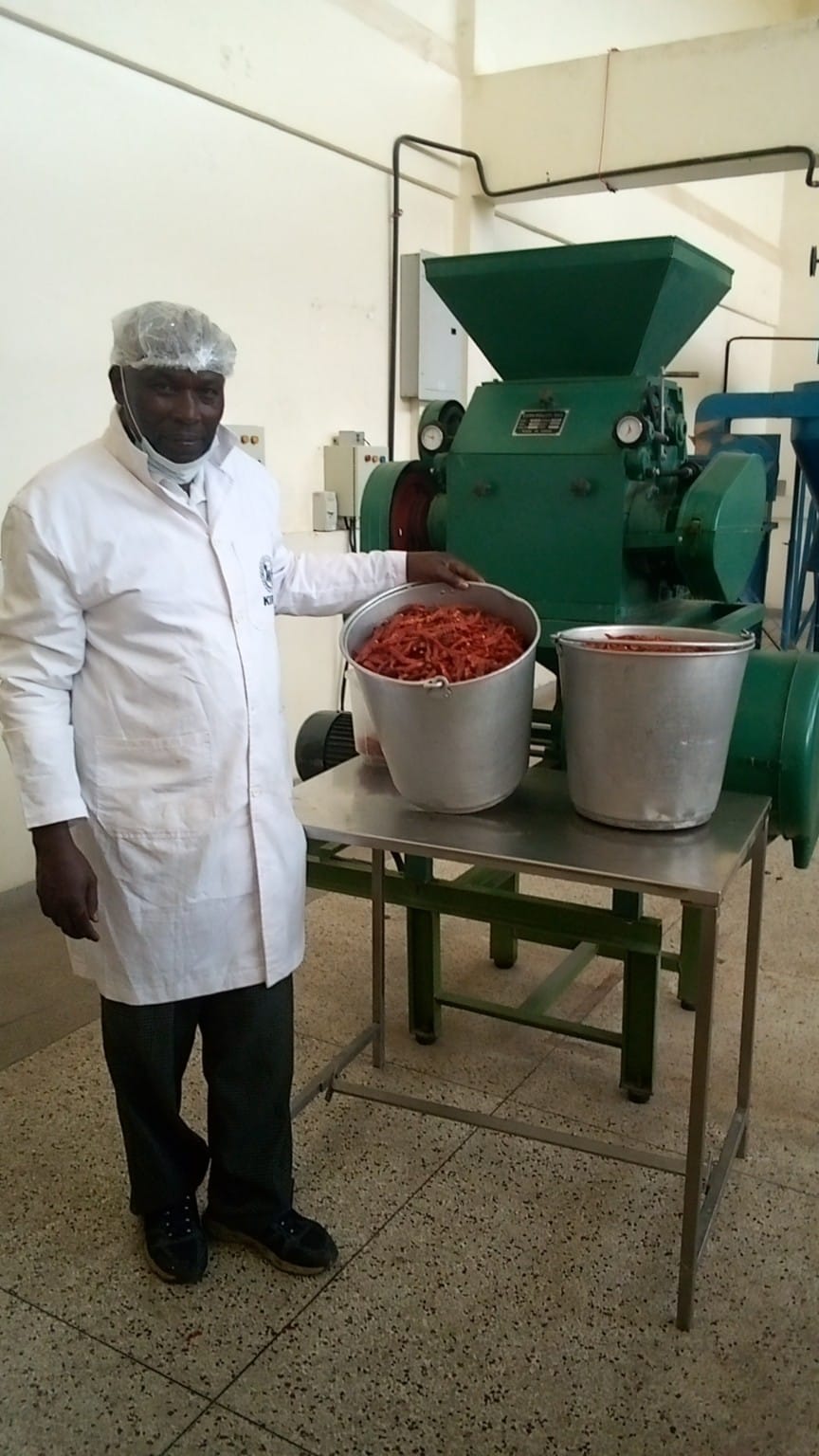
Help came through Agribiz, an organization supporting farmers to scale their enterprises through the KCIC project, sponsored by Danida and the World Bank. Richard was enrolled in a year-long training programme that changed the way he viewed chilli. “We were taken to Kenya Industrial Research and Development Institute (KILDI) in Kisumu, where we learnt through practical skills the process of chili processing,” he recalls.
The training opened a new door, value addition could turn a highly perishable crop into a product with a longer shelf life, a wider market and a much higher value. After the training, Richard began taking about 50 kilograms of chilli at a time to KILDI for drying and processing before selling it. He grows Red Demon and Long Cayenne varieties, with the latter particularly suitable for milling into powder and making chilli sauce.
“When I started selling the processed chilli, I discovered that the market is available, but very few farmers are producing. Those in our group who left production are unwilling to come back, despite demand being higher than supply,” he says.
Today, Richard sells some of his fresh chilli to local markets while taking processed chilli to supermarkets. The shift from simply selling what comes out of the farm to processing it has given him access to a more lucrative market.
From Ksh 150 to Ksh 1,400 per Kilogram
The difference in profits for fresh chilli versus processed chilli give a clear picture of the value gained in processing. Fresh chilli is vulnerable to spoilage and has a short shelf life. Once dried, however, it can last for up to a year without going bad. One kilogram of dried chilli fetches about Ksh150 before milling. Once processed into powder, the same kilogram can sell for about Ksh1,400, with 50 grams retailing at Ksh70. This shows the difference between selling a raw commodity and selling a finished product.
“The market, especially in supermarkets, is available,” he says. “The problem is that very few farmers are producing chilli.” With support from Agribiz, the group has acquired a drier and a milling machine. The equipment has already been installed, although the group is still awaiting inspection by the Kenya Bureau of Standards (KEBS) before fully operating the processing unit.
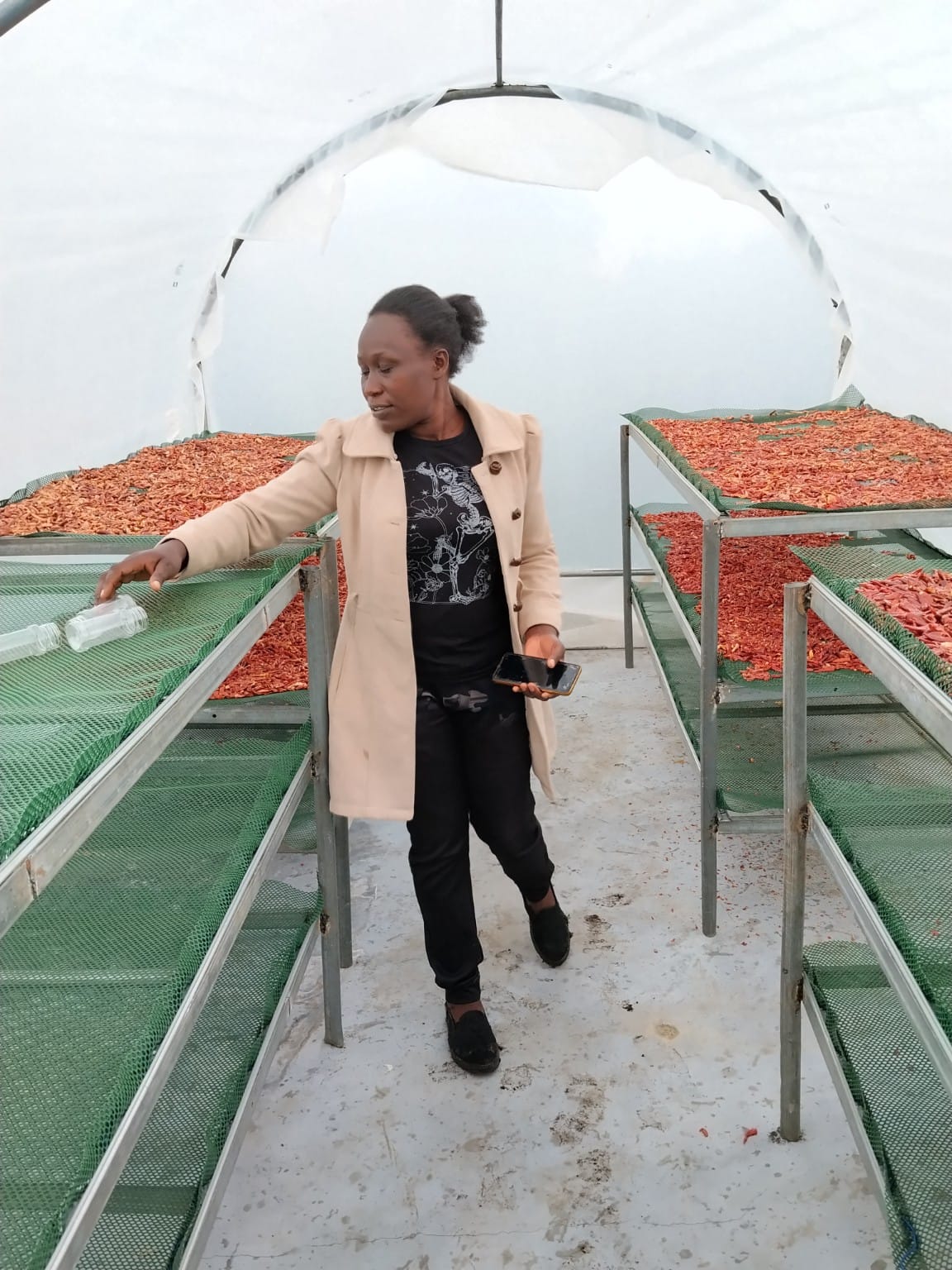
A commercial drier and milling machine can cost about Ksh500,000. The group’s drier can handle approximately 100 kilograms of chilli in three days, giving farmers a practical way to preserve their harvest instead of watching it rot.
Turning chilli into a marketable product
Processing chilli is a straightforward process, provided farmers have the right equipment and follow food safety requirements. The chilli is first sorted to remove discoloured or damaged pods. It is then dried before being milled and packaged. The final product is branded for the market.
The packaging must provide important information, including the expiry date, type of chilli, company name and batch number. Richard also advises processors to retain a labelled sample of every batch. “After processing, one is advised to retain a labelled package, just in case reference is required after release to the market,” he says.
Unmet market demand
The group’s biggest challenge now is finding enough chilli to the huge demand. Of the approximately 350 farmers who once produced chilli in the group, only 55 are currently producing, and most do so on a small scale. The shortage has forced Richard to buy chilli from other farmers at between Ksh50 and Ksh70 per kilogram and resell the processed product at a much higher value.
The major challenge facing the group is spoilage during transportation. Some fresh chilli is spoilt in transit because the group lacks cooling facilities to preserve the crop on its journey to processors and markets.
Richard and his fellow farmers are therefore looking beyond their current operation. They want more dryers to be established closer to farmers in Narok South and Transmara, reducing post-harvest losses and making processing more accessible.
They also hope to expand their processing unit and establish adequate storage facilities. Their products are already reaching customers in Lamu, Mombasa, Baringo, Taita Taveta, Kwale and Bomet counties.
The members now appreciate the benefit gained in every step. Drying gives the chilli a longer life without spoiling, milling gives it a new form that increases its value significantly and branding gives it a place in supermarkets, and identity among customers.
Total comments (--)
Let others know what you think

The Same Author


3KM Members Demonstrate Strength in Numbers Through Aggregation and Value Addition




Lorem ipsum dolor sit amet, consectetur adipiscing elit. Suspendisse varius enim in eros elementum tristique. Duis cursus, mi quis viverra ornare, eros dolor interdum nulla, ut commodo diam libero vitae erat. Aenean faucibus nibh et justo cursus id rutrum lorem imperdiet. Nunc ut sem vitae risus tristique posuere.