

Busia Couple Taps into the growing market for Bokashi Fertilizer

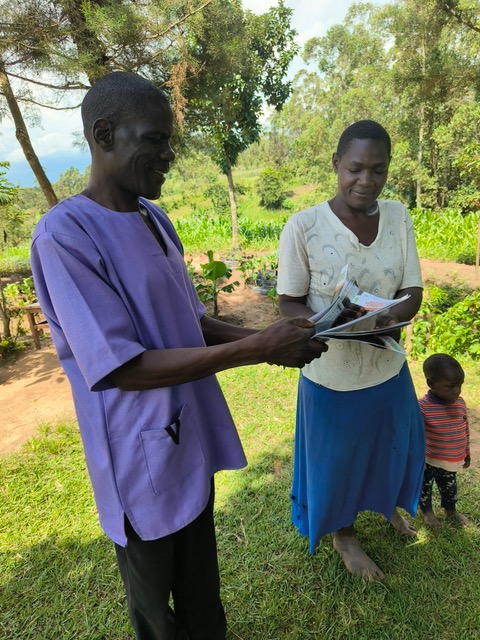
In Sibele Village, Busia County, Benjamin Akwata has turned a simple soil-health practice into a thriving enterprise. Together with his wife, Lilian Ombandu, he produces and sells bokashi fertilizer to farmers in the community, helping them improve crop yields while reducing reliance on costly synthetic inputs.
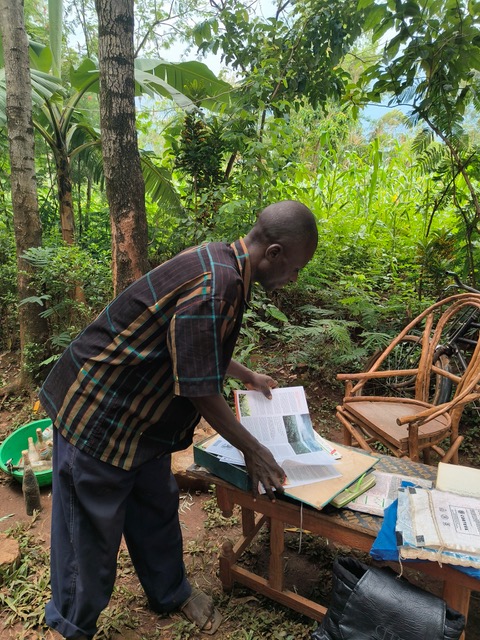
Benjamin's journey into bokashi production began after reading about the technology in The Organic Farmer magazine. His interest was further strengthened through training and mentorship provided by an extension officer from Biovision Africa Trust, a Kenya-based organization that promotes agroecology and sustainable farming practices.
What started as a learning experience soon evolved into a profitable venture. Today, the couple is among the pioneers of bokashi fertilizer production in their area and has earned a reputation as reliable suppliers. Farmers often place orders long before the fertilizer is ready. "The biggest advantage of bokashi is that it matures very quickly," says Benjamin. "Within just 14 days, it is ready for use, unlike many other organic fertilizers that take much longer."
How Bokashi Fertilizer Is Made
One of the reasons bokashi has gained popularity among farmers is that the raw materials are readily available on most farms.
The process involves:
Bokashi is made using locally available and environmentally friendly materials as an alternative to synthetic fertilizers. Farmers can prepare it using livestock manure, poultry droppings, charcoal dust, bran, rock dust or wood ash, rice husks, molasses, and yeast. Additional organic materials such as kitchen waste can also be incorporated.
Each ingredient plays a specific role in the fermentation process and soil improvement. Livestock and poultry manure provide essential nutrients for plant growth. Charcoal dust contributes carbon, which improves soil aeration and porosity, helps regulate soil temperature, and absorbs harmful pathogens. Rock dust supplies important minerals needed by crops, while wood ash can be used as an alternative to reduce soil acidity.
Rice husks increase silicon levels in the soil, strengthening plant tissues and enhancing crop resilience. Where rice husks are unavailable, farmers can substitute them with chopped stalks from maize, sorghum, millet, wheat, or other locally available crop residues.
Molasses serve as an energy source for beneficial microorganisms that break down organic matter during fermentation. Yeast acts as a catalyst that accelerates the fermentation process. In situations where yeast is unavailable, virgin soil collected from a naturally forested area can be used because it contains beneficial microorganisms.
Preparing bokashi begins by layering farmyard manure, charcoal dust, and bran. Separately, water is mixed with molasses and yeast to create a liquid solution. This mixture is then sprinkled over the heap while thoroughly turning the materials to ensure uniform distribution.
The moisture content of the mixture is critical. A simple test can be used to determine the correct consistency. When a handful of the material is squeezed, it should form a ball without crumbling or releasing excess liquid. If the material falls apart, it is too dry and requires additional moisture. If water drips out, it is too wet and should be aerated or mixed with dry materials.
As fermentation progresses, the temperature of the heap rises, indicating active microbial activity. Bokashi fertilizer should be turned twice daily, preferably in the morning and evening. Regular turning ensures proper aeration and uniform fermentation throughout the heap. After fourteen days, the fermentation process is complete and the bokashi is ready for use.
Although the process is straightforward, Benjamin notes that success depends on consistency and commitment.
"Many people admire what we do and would like to earn income from bokashi," he says. "But it requires dedication. You have to turn it at least twice every day for it to mature properly, and not everyone is willing to put in that effort."
Meeting Farmers' Demand
The couple sells a 90-kilogramme bag of bokashi fertilizer for KSh 600 while reserving some for use on their own farm. Demand continues to grow as more farmers witness the benefits of the fertilizer.
For many smallholder farmers, the rising cost of synthetic fertilizers has made crop production increasingly expensive. At the same time, prolonged use of chemical inputs has contributed to declining soil health. Bokashi offers an affordable alternative that improves soil fertility while reducing production costs.
Benjamin and Lilian have experienced these benefits firsthand.
"In the past, our maize harvest would run out long before the next season," Benjamin recalls. "Now, we harvest enough food to sustain our family until the following harvest."
Diversifying for Resilience
Beyond bokashi production, the family has embraced multiple income-generating activities to strengthen their livelihoods. Lilian grows and sells indigenous vegetables such as cowpeas (kunde) for their nutritious leafy vegetables and slenderleaf (mitoo). She strategically markets the vegetables outside their maize milling shop, creating a convenient one-stop location for customers.
"As people come to mill maize for flour, they often buy fresh vegetables as well," says Lilian. "That gives us a ready market." The couple also operates a posho mill, keeps poultry, and rears fish. Along a nearby riverbank, Benjamin manages two fish ponds that provide another dependable source of income. "Very few people rear fish in this area, so demand is high," he says. "Most buyers purchase directly from the farm."
These diverse enterprises have enabled the family to comfortably support their two children, including their eldest daughter who attends a national high school.
The Value of Knowledge
Training and access to information have played a key role in the family's success. Benjamin credits Biovision Africa Trust extension officers for helping improve their poultry enterprise through training on homemade feeds and the use of plant-based remedies for disease management.
"Before receiving training, we relied on trial and error," he says. "Now we understand how to feed our birds properly and manage diseases using proven methods." The couple has also adopted environmentally friendly crop protection practices. For example, they prepare biopesticides using tithonia leaves mixed with water and stirred daily for 14 days before application.These innovations have reduced production costs while improving farm productivity.
For Benjamin and Lilian, farming is a sustainable business that supports their family's future.
Total comments (--)
Let others know what you think

The Same Author
Chilli Farmers in Bomet County of Kenya Turn a Challenge into a Lucrative Opportunity

3KM Members Demonstrate Strength in Numbers Through Aggregation and Value Addition




Lorem ipsum dolor sit amet, consectetur adipiscing elit. Suspendisse varius enim in eros elementum tristique. Duis cursus, mi quis viverra ornare, eros dolor interdum nulla, ut commodo diam libero vitae erat. Aenean faucibus nibh et justo cursus id rutrum lorem imperdiet. Nunc ut sem vitae risus tristique posuere.