

Black Soldier Fly Rearing Pays Off for Young Graduate
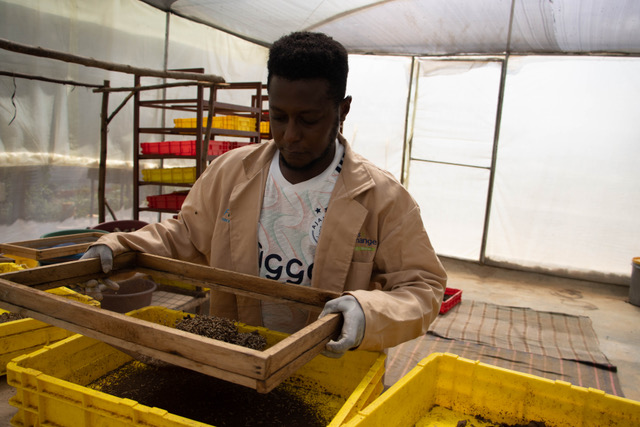
Edwin Sila, a 26-year-old from the border of Makueni and Kibwezi counties, never expected an insect to change his life. After studying Exercise and Sports Science at Kenyatta University and briefly working inhospitality, he was introduced to black soldier fly (BSF) rearing by his uncle,an officer in the County Department of Agriculture. Curious, Edwin researched online, visited a Protein Masters training centre in Nairobi, and bought starter breeding stock for just Ksh2,000. Back home, he built a simple rearing structure using sticks and a mosquito net, feeding the larvae with cow dung and chicken waste to supplement his pigs, which quickly took to the feed.
In his first year and a half, Edwin produced about 15kg of larvae per month, but he faced challenges. Cow dung proved to be a poor feed, mosquito nets allowed mature flies to escape, and safari ants destroyed some batches due to the lack of a concrete floor. His breakthrough came when he received Ksh750,000 from the Makueni County Agricultural Sector Development Support Programme (ASDSP). With this support, he built proper rearing structures fitted with insect and shade nets, acquired rearing crates and a hammermill, and completed a week-long training at Protein Masters. He learned that kitchen waste such as potato peels, leftover rice, and bread was the best substrate for fast larval growth.
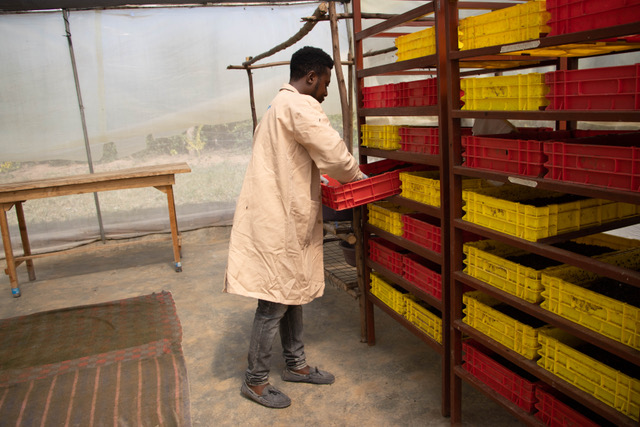
Today, Edwin harvests up to 100kg of dried larvae each month. He feeds some directly to his chickens or processes them into powder, improving bird health, egg production, and feather quality. He sells dried larvae at Ksh150 per kilogram, earning about Ksh15,000 monthly, and sells frass for Ksh30 per kilogram, moving about 600kg per month. He also trains farmers and youth groups at Ksh1,000 per trainee and has helped establish BSF units in Kwale and Nakuru counties. Edwin believes BSF rearing is ideal for young people because it requires little time and minimal inputs, relying mainly on kitchen waste while reducing environmental pollution. He plans to expand his farm to meet growing demand and believes many young farmers can replicate his success with the right training and support.
Contact: 0759 094 040
Total comments (--)
Let others know what you think

The Same Author
Chilli Farmers in Bomet County of Kenya Turn a Challenge into a Lucrative Opportunity


3KM Members Demonstrate Strength in Numbers Through Aggregation and Value Addition





Lorem ipsum dolor sit amet, consectetur adipiscing elit. Suspendisse varius enim in eros elementum tristique. Duis cursus, mi quis viverra ornare, eros dolor interdum nulla, ut commodo diam libero vitae erat. Aenean faucibus nibh et justo cursus id rutrum lorem imperdiet. Nunc ut sem vitae risus tristique posuere.