

A Couple Demonstrates how Breaking Gender Role Stereotypes helps Improve Livelihoods
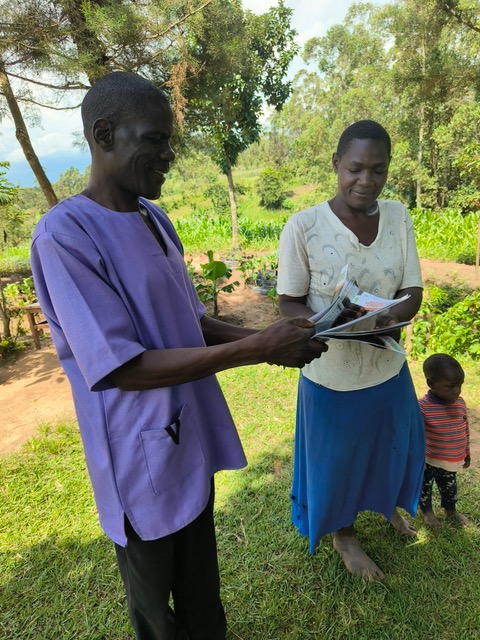
For many years, 40-year-old Jackline Nyanga Masai and her husband, Nelson Murera, relied on their small piece of land to grow staple crops such as maize and cassava. Like many smallholder farmers in rural Kenya, they practiced monocropping, planting the same crops season after season. Over time, declining soil fertility led to poor harvests, leaving the family with barely enough food for consumption and little or nothing to sell for income.
With five children to raise and educate, meeting household needs became increasingly difficult. School fees were often a struggle, and financial pressure weighed heavily on the family.
Things began to change when Jackline joined Eshimichi Dairy Farmers Group, a cooperative made up largely of dairy farmers. Through the group, she gained access to training opportunities offered by Biovision Africa Trust (BvAT). During a farm visit, BvAT field officer Pamella Otieno identified significant untapped potential on Jackline's farm.
"When I visited Jackline, I realized there was tremendous potential to improve productivity. What she needed most was the right knowledge and skills. Her farm reflected the situation of many other members of Eshimichi Dairy Farmers Group," recalls Pamella, who is based in Kakamega.
The trainings were conducted on the farms of different group members. Attending them required Jackline to spend time away from home, creating a challenge because she had young children who needed care. Rather than allowing this to become a barrier, her husband Murera stepped in and took responsibility for childcare whenever his wife attended training sessions.
"I witnessed firsthand how household gender roles can influence a family's quality of life," says Pamella. "The positive changes that followed were made possible because Murera was willing to challenge traditional stereotypes and support his wife's participation in training."
The training introduced Jackline to practical and affordable farming techniques, including compost making and the establishment of kitchen gardens. These skills would soon transform the family's livelihood.
She learned how to establish productive kitchen gardens using resource-efficient methods such as mandala gardens, cone gardens, and vertical sack gardens. These approaches enabled the family to grow a diverse range of nutritious crops, including amaranth, kunde (cowpeas), sagaa, black nightshade, kale, spinach, bananas, fruits, maize, and cassava.
The impact was immediate. The family now enjoys a steady supply of vegetables throughout the year, significantly improving household nutrition. Surplus produce is sold to neighbours, generating income that helps meet daily household expenses.
"The kitchen garden has become a reliable source of food and income," says Jackline. "Sometimes the earnings are enough to contribute toward school fees."
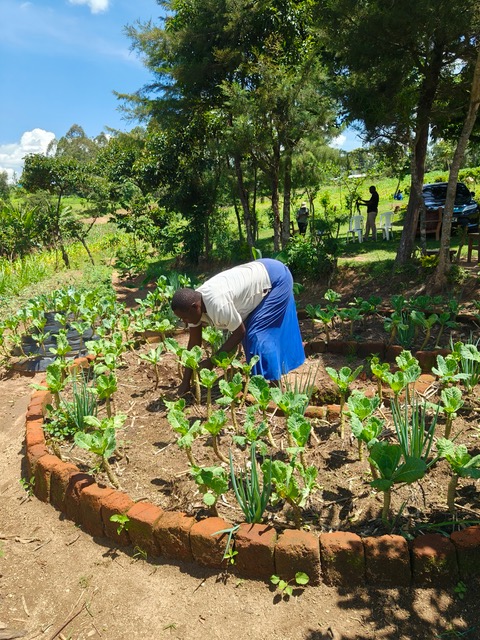
In addition to agricultural skills, the group training covered table banking, food storage, proper food preparation and portioning to reduce wastage, and nutrition education. These lessons helped the family improve both financial management and food utilization.
Today, feeding the family is no longer the constant struggle it once was.
Beyond the economic benefits, the changes have also strengthened relationships within the household.
"When there was no income, I had to ask for money for every small household need," Jackline explains. "If there was no money available, it often led to tension and disagreements. Now, I can meet many household expenses on my own and even contribute to our children's education."
Looking back, both Jackline and Murera believe their progress has been built on mutual support and shared responsibility.
In many communities, childcare and household duties are considered the sole responsibility of women, limiting their ability to participate in training, leadership, and income-generating opportunities. Murera chose a different path.
"I am happy that I supported Jackline by staying home to take care of the children while she attended training," he says. "The knowledge she brought back has greatly improved our household. We are now food secure and earning income from our land in ways we had never imagined."
His support extends beyond childcare. Together, the couple works on the farm, preparing compost manure, weeding, tending the kitchen garden, and harvesting produce.
"We work as a team," says Jackline. "Whether it is making compost, weeding, or harvesting vegetables, we do it together."
Their cooperation has created a more harmonious home environment where responsibilities and resources are shared. Murera notes that this level of partnership remains uncommon in many households, often limiting their development.
"When women are denied opportunities to learn and gain exposure, the whole family loses," he says. "But when they acquire knowledge on food production, nutrition, and household resource management, everyone benefits. Families eat better, incomes improve, and there is greater peace in the home because women become more economically empowered."
Murera encourages other men to support their wives whenever opportunities for training and learning arise. He believes that men should not only allow women to participate but should also help implement the ideas and practices they bring home.
For the Murera family, a simple decision to share responsibilities opened the door to new knowledge, improved food security, additional income, and a happier home. Their story demonstrates that when families work together and invest in learning, even a small piece of land can become a source of transformation and hope.
Total comments (--)
Let others know what you think

The Same Author
Chilli Farmers in Bomet County of Kenya Turn a Challenge into a Lucrative Opportunity







Lorem ipsum dolor sit amet, consectetur adipiscing elit. Suspendisse varius enim in eros elementum tristique. Duis cursus, mi quis viverra ornare, eros dolor interdum nulla, ut commodo diam libero vitae erat. Aenean faucibus nibh et justo cursus id rutrum lorem imperdiet. Nunc ut sem vitae risus tristique posuere.