

Ingo Agrichamps Youth Group Seizes Multimillion-Shilling Opportunity in Fodder Production
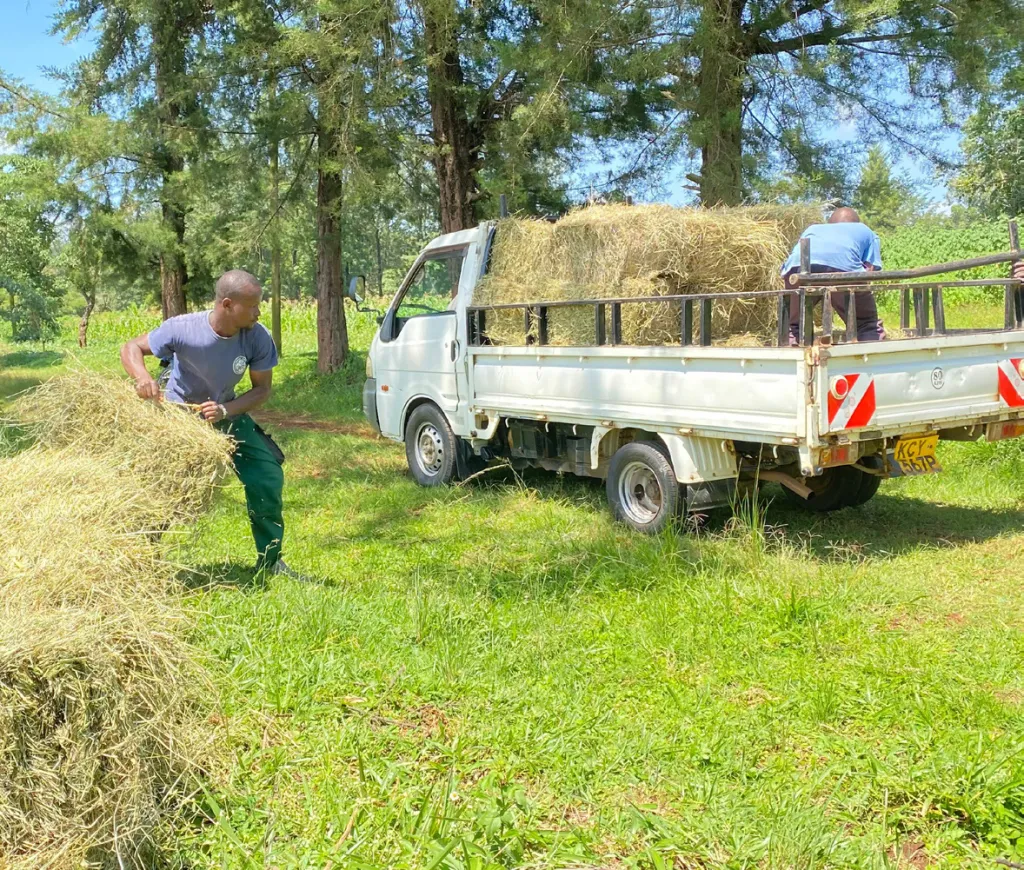
In Western Kenya, a group of determined young agripreneurs is quietly reshaping livestock farming through large-scale fodder production. Formed in December 2022 and mobilized by Leaf CBO, the Ingo Agrichamps Youth Association has emerged as a model of youth-led agribusiness, improving dairy productivity while creating sustainable livelihoods in Kakamega County.
Before the group entered the fodder value chain, dairy farmers across Kakamega faced persistent challenges. Access to high-quality hay was limited, leading to low milk yields, while dairy cooperatives struggled with unreliable supply and the inability to purchase hay in bulk. These gaps in the market inspired the youth to take action.
From Vision to 25 Acres of Fodder
Ingo Agrichamps officially launched its fodder production initiative in 2023 with a clear mission: to bridge the hay supply gap while empowering young people through agribusiness. A key driver of their success has been strategic access to land. With support from Food and Agriculture Organization, the group initially leased three acres at Bukura Agricultural Training Centre. Encouraged by strong returns, they later partnered with the Agricultural Society of Kenya, Kakamega Branch, to lease an additional seven acres of public land.
These lease agreements, covering the period from 2023 to 2025, were renewed in January 2025 for a further five years, securing land access until 2030. Building on this momentum, individual members and youth groups have also leased private land, adding approximately 15 acres to the project. By June 2025, Ingo Agrichamps was managing around 25 acresunder fodder production, with plans to expand to 50 acres by the end of 2027.
The association primarily grows Boma Rhodes grass, a high-yield fodder variety introduced through the FAO-led Livestock Feeds Commercialization project. The group currently harvests three times per acre each year and plans to diversify into other fodder types, including PakChong 1 Super Napier, while intercropping with Desmodium to improve soil health and feed quality.
Youth Empowerment and Community Impact
The impact of Ingo Agrichamps extends well beyond hay production. The association engages more than 150 youths through eight member groups, offering opportunities across the dairy value chain as well as in aquaculture, horticulture, and climate conservation initiatives. Their main customers include individual dairy farmers, dairy cooperatives, and the Kakamega Dairy Development Corporation. Through direct farm delivery, the group ensures consistent quality while strengthening relationships with buyers.
By supplying reliable, high-quality fodder, Ingo Agrichamps plays a critical role in boosting milk production across Kakamega County. For dairy cooperatives, the group provides a dependable source of hay, while large institutions benefit from bulk supply that supports consistent dairy output.
Strong Financial Performance
Between 2023 and 2025, the association recorded impressive financial growth. From 25 acres producing three harvests annually, Ingo Agrichamps generated over KSh 4.8 million in gross sales. Average annual production costs stand at approximately KSh 126,000 per acre, covering land leases, seed, labour, and baling. These costs have been reduced through composting practices and the use of public land.
Over the past two years, the group has achieved an estimated net income of KSh 2.28 million, which has been reinvested into lease renewals and operational expansion. Each youth involved earns an average of KSh 52,200 per season, with some members earning more through group-based land leasing arrangements.
Looking ahead, the association plans to acquire a tractor-driven baler and construct a hay storage barn, reducing post-harvest losses and improving efficiency. By 2030, they aim to invest an additional KSh 3 million in acquiring a tractor to support the baler.
Challenges and the Road Ahead
Despite their progress, the group faces challenges, particularly the lack of effective local baling services. Currently, they rely on hired balers from neighbouring counties, which increases costs and creates operational risks. High input prices and limited access to credit for young farmers also remain significant barriers.
To overcome these challenges, Ingo Agrichamps has prioritized long-term public land leases and is building partnerships to support future equipment acquisition and storage infrastructure. With plans to double acreage, diversify fodder varieties, and engage up to 500 youths in fodder production, the association is positioning itself as a cornerstone of sustainable livestock farming in Kakamega County.
Ingo Agrichamps Youth Association is creating opportunity and a new generation of empowered farmers.
Total comments (--)
Let others know what you think

Lorem ipsum dolor sit amet, consectetur adipiscing elit. Suspendisse varius enim in eros elementum tristique. Duis cursus, mi quis viverra ornare, eros dolor interdum nulla, ut commodo diam libero vitae erat. Aenean faucibus nibh et justo cursus id rutrum lorem imperdiet. Nunc ut sem vitae risus tristique posuere.




Lorem ipsum dolor sit amet, consectetur adipiscing elit. Suspendisse varius enim in eros elementum tristique. Duis cursus, mi quis viverra ornare, eros dolor interdum nulla, ut commodo diam libero vitae erat. Aenean faucibus nibh et justo cursus id rutrum lorem imperdiet. Nunc ut sem vitae risus tristique posuere.