

Proper Feeding of Goat Kids for Healthy Growth and Early Weaning
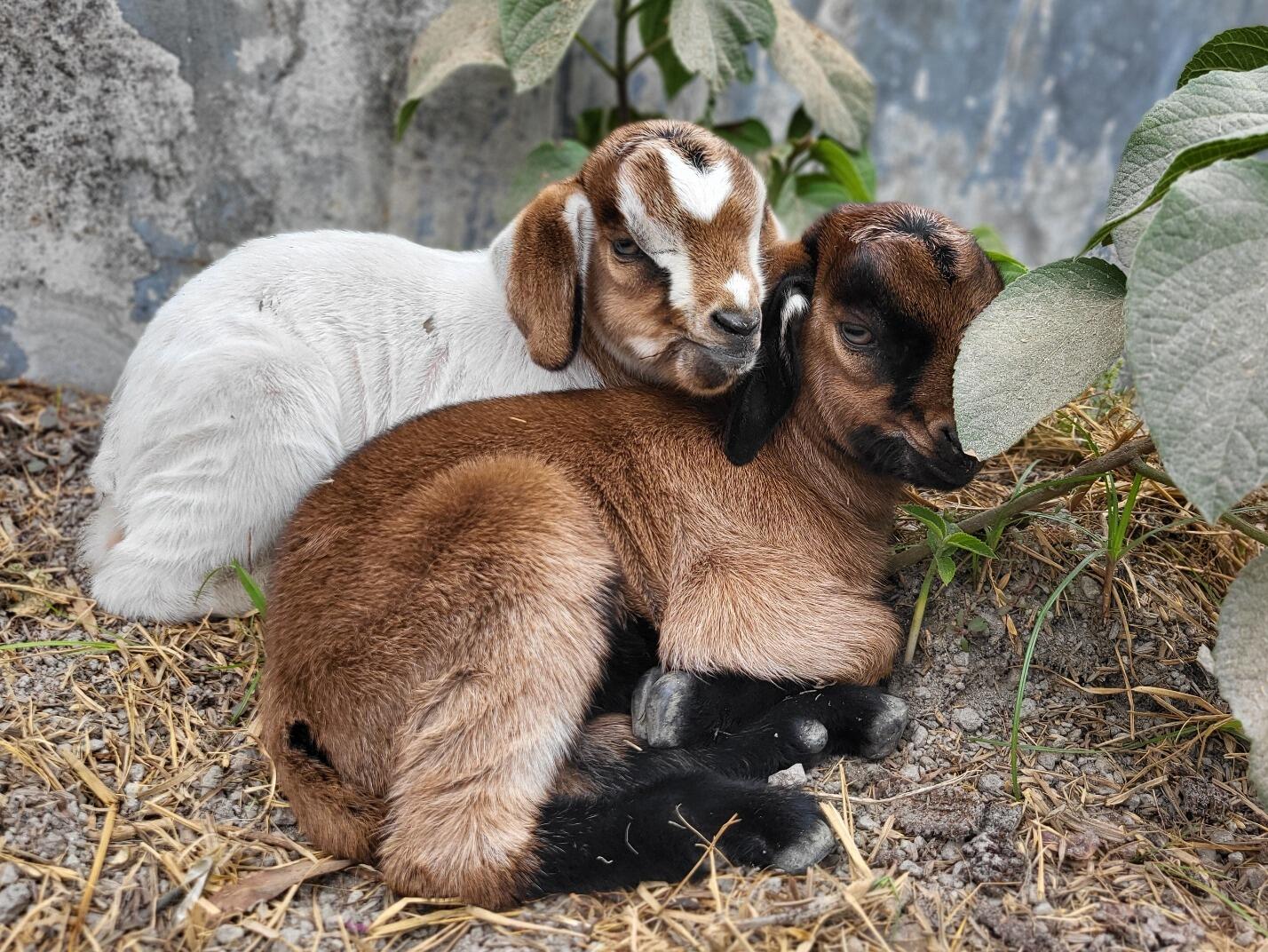
The first few weeks of a goat kid’s life are critical in determining its future health, growth, and productivity. Proper feeding during this period not only reduces mortality but also promotes faster growth, stronger immunity, and earlier weaning. Farmers who follow recommended feeding practices can raise healthier kids while reducing the amount of milk required from the doe.
The most important feed for a newborn kid is colostrum, the first milk produced by the mother after birth. Colostrum is rich in antibodies that protect the young animal against diseases during its early life. Because a kid's ability to absorb these antibodies begins to decline within six hours of birth, colostrum should be fed as soon as possible and within the first 24 hours. Ideally, a newborn kid should receive 30 to 60 millilitres of colostrum within the first two hours after birth, followed by additional feedings throughout the day.
After the colostrum-feeding stage, kids should be given warm milk or a suitable milk replacer at a rate equivalent to 10–12 per cent of their body weight each day. The milk should be divided into at least two portions daily, although younger kids benefit from more frequent feeding. Farmers can feed kids through suckling, bottle feeding, or bucket feeding. When suckling is practised, the kid should be allowed to nurse in the morning and evening.
During the first week of life, milk feeding should gradually increase to meet the kid's growing nutritional needs. On the second day, the kid can be fed about 60 millilitres of milk four times a day. This amount can be increased to 75 millilitres four times daily on the third day. From the fourth day through the second week, milk intake can gradually rise from about 90 millilitres to 260 millilitres per feeding, given four times daily.
By the end of the second week, farmers should begin introducing small quantities of solid feed and clean drinking water. Suitable feeds include tender grass, quality hay, and grain. However, because a kid's rumen is not fully developed during the first two to three weeks of life, solid feeds should only be offered in small amounts initially to encourage rumen development.
Other suitable starter feeds include sweet potato vines, tree legumes, natural tree leaves, and high-quality hay. These feeds help strengthen the digestive system and prepare the kid for weaning. Access to a mineral lick and clean water is equally important. Each kid should have access to one to two litres of clean water daily, depending on age and environmental conditions.
From the third week onwards, milk feeding can gradually be reduced. The number of milk feedings may be lowered from four to three times a day while increasing the kid's access to solid feeds. Between the fourth and ninth weeks, kids can receive between 290 and 350 millilitres of milk three times daily while freely consuming forage and other solid feeds.
As the kid approaches weaning age, milk intake should continue to decrease. Between the tenth and eleventh weeks, a total of about 700 millilitres of milk can be provided in two feedings per day, supplemented with hay and grain. During the twelfth and thirteenth weeks, one feeding of approximately 350 millilitres of milk per day is sufficient before complete weaning.
Introducing nutritious forages such as sweet potato vines can improve growth while reducing dependence on milk. Observations have shown that kids supplemented with sweet potato vines generally gain more weight than those relying solely on suckling. At 90 days of age, for example, kids fed sweet potato vines reached an average weight of 8.4 kilograms compared to 5.6 kilograms for kids that depended entirely on suckling. This demonstrates the potential of strategic supplementation in promoting faster growth and reducing feeding costs.
Good kid-feeding practices lay the foundation for productive goats. Ensuring timely colostrum intake, providing adequate milk, introducing quality solid feeds at the right time, and maintaining access to clean water and minerals can significantly improve survival rates, growth performance, and the overall profitability of goat farming.
Total comments (--)
Let others know what you think

Lorem ipsum dolor sit amet, consectetur adipiscing elit. Suspendisse varius enim in eros elementum tristique. Duis cursus, mi quis viverra ornare, eros dolor interdum nulla, ut commodo diam libero vitae erat. Aenean faucibus nibh et justo cursus id rutrum lorem imperdiet. Nunc ut sem vitae risus tristique posuere.


Lorem ipsum dolor sit amet, consectetur adipiscing elit. Suspendisse varius enim in eros elementum tristique. Duis cursus, mi quis viverra ornare, eros dolor interdum nulla, ut commodo diam libero vitae erat. Aenean faucibus nibh et justo cursus id rutrum lorem imperdiet. Nunc ut sem vitae risus tristique posuere.